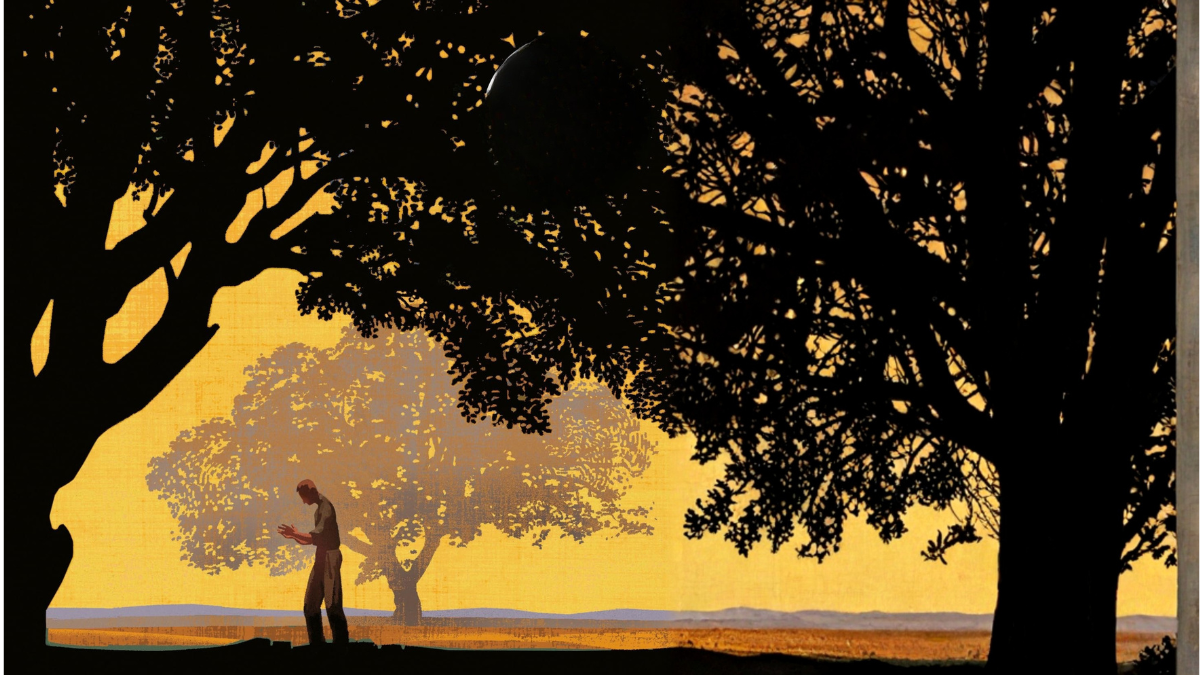
East of Eden by John Steinbeck
-
Steinbeck breaks traditional narrative boundaries in East of Eden by incorporating his own family history and inserting himself as a minor character and narrator. How did this insertion affect your reading of the novel, and to what extent did blending personal memoir with fiction give the story more or less emotional power and credibility?
Early in the novel, Samuel and Liza Hamilton are introduced as two drastically different personalities who form a surprisingly stable partnership. What did you make of their dynamic, and how do their contrasting approaches to life and morality shape their children?
How would you characterize Adam Trask? In what ways do his childhood experiences—particularly his relationship with his father and brother—shape his personality and dictate his subsequent life choices?
Cathy Ames is introduced as a character devoid of human empathy. Do you view Cathy as a purely evil anomaly, or is she a product of her environment and the people who project their own desires onto her?
Lee could be described as a philosopher trapped by the racial expectations of his time. Does his choice to speak in pidgin make sense to you, as he explains it to Sam Hamilton?
Sibling rivalry is a major theme in East of Eden, as seen in the jealous dynamics between Adam and Charles, and later Cal and Aron. Why do you think Lee considers the story of Cain and Abel to be the "symbol story of the human soul," and to what extent do you agree or disagree with this idea?
How does Abra’s relationship with Aron and the Trask family evolve as she matures, and what do you think is the significance of her shift from embracing idealized childhood fantasies to accepting human flaws and real-world complexities?
Near the end of the novel Adam says to his son Cal that “if you want to give me a present—give me a good life. That would be something I could value.” Does Adam have a good life? Would you characterize his life as successful in the end?
Lee spends years studying the Hebrew translation of “timshel” ("thou mayest"), concluding that human beings have the ultimate power to choose between good and evil. How do you reconcile his conclusion with characters like Cal and Adam, who often appear to be trapped in repeating patterns and living out predetermined fates through no choice of their own?
Steinbeck sets the majority of East of Eden against the backdrop of the Salinas Valley at the turn of the twentieth century, prominently describing its nature and geography. What significant changes occur in the valley throughout the story, and how do the effects of time on the land reflect broader shifts in the American identity and experience?
While some of Steinbeck’s characterizations rely on racial stereotypes, he also offers surprisingly prescient commentary on the experiences of minority groups and the displacement of Indigenous peoples. Which characters, scenes, or opinions in East of Eden do you think challenged the conventional social notions of the author's era, and which portrayals remained bound to the prejudices of their time?
East of Eden has often been criticized for its portrayal of women. Considering characters like Cathy Ames, Liza Hamilton, and Abra Bacon, to what extent do you think they are as fully realized and complex as the primary male characters?