A Fine Balance by Rohinton Mistry
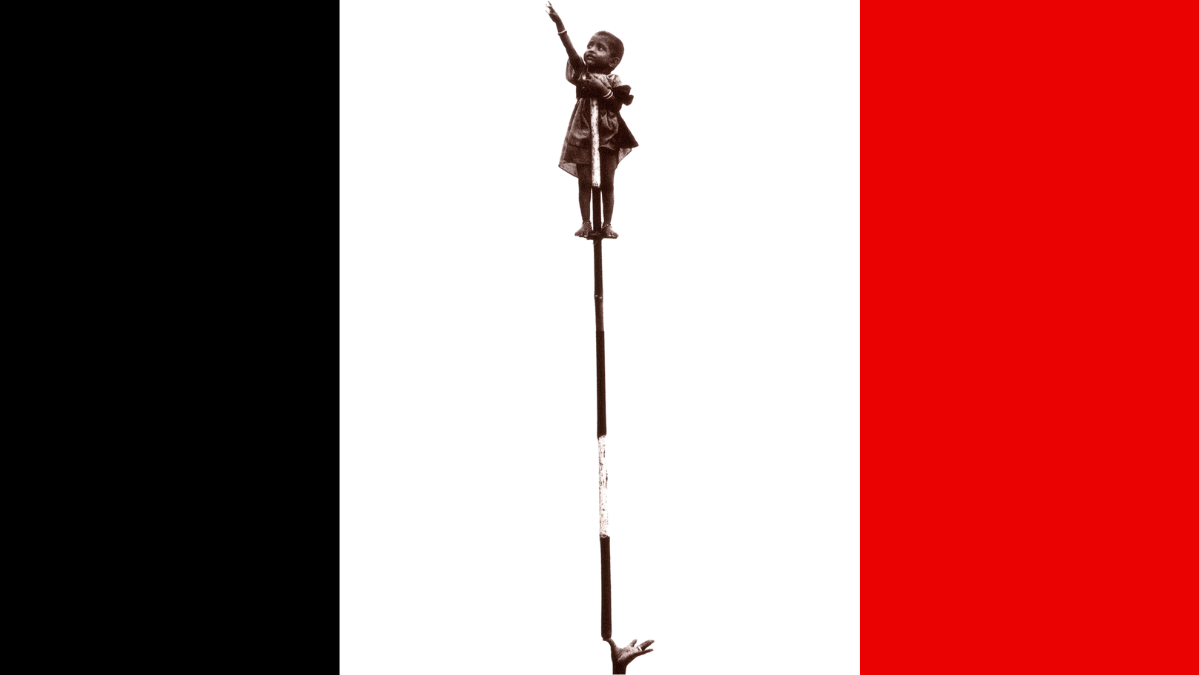
Indian-Canadian writer Rohinton Mistry published his second novel, A Fine Balance, in 1995. Set during the turmoil of the Emergency - one of the darkest periods in modern Indian history - the book brings together four individuals from very different backgrounds who unite in a desperate, almost hopeless, struggle for survival.
The 600 page book left our May 2026 readers with a lot to say, especially for those from India, such as Samawiyah, who heard a call to her personally within the lines of the text:
Samawiyah’s Take:
”Is A Fine Balance quintessential India? No. But is it a real India? Yes.”
When Rohinton Mistry's A Fine Balance was shortlisted for the Booker Prize, Australian critic Germaine Greer reportedly tore it down, saying, "It's a Canadian book about India. What could be worse?" The briefest look at online reviews shows she's not alone in feeling there's something wrong with this book. And it's not just because Mistry is Canadian. The culprit, really, is the sheer misery the book dumps on its readers, that it starts to read as though Mistry "hates India."
I'd like to set the record straight. First, I think it's unfair to discount Mistry's lived experience simply because he eventually emigrated. He spent the first twenty-three years of his life in Mumbai, and the novel is clearly set there, even if the city is never named. Being born in a place and coming of age there is a far cry from writing about it as a foreigner looking in. The prose and dialogue are unapologetically Indian; it is refreshing to read dialogue that, despite being written in English, sounds exactly like the way we talk in Hindi.
Now, to the real core of the complaint: the misery. I can see why it's so easy to dismiss the novel because of it. But painting nothing but a bleak picture, while often the mark of lesser novels that offer bleakness without insight, doesn't automatically qualify a book for that category. Part of the impulse to file it there, I think, comes from expecting a representative novel, one that gives a more-or-less comprehensive picture of Indian life. Given that A Fine Balance is a sweeping novel of epic scale, this is not an unreasonable expectation. In my reading, though, the novel is really trying to do only one thing: dive deep into the realities of systemic oppression. Of course there is a whole other India that doesn't appear in these pages. It is beautiful, loving, kind, and far more full of hope. So is A Fine Balance quintessential India? No. But is it a real India? Yes.
The relentless tragedy Mistry employs is purposefully suffocating. He is saying, "I will allow you no respite, because there is an entire section of society that gets none." That said, I do concede that he could have made a few different choices and toned the tragedy down ever so slightly without compromising this goal. It's a complaint I can look past, though.
Hope here is not meant to feel like an equal force pushing back against the misery. Rather, any hope that exists survives on a precarious (fine) balance, where the tiniest nudge sends everything crashing down. And there is hope. Placed against the rigid, entrenched realities of the caste divide, the bonds that form in Dina's apartment are quietly revolutionary. This is the emotional core of the story, and it's deeply compelling.
Such a core is only ever as strong as the characters who carry it. In a novel of such massive scale, it's very easy for the individual to get lost. Characters can fall flat or become pure plot devices. Admittedly, this flaw is not entirely absent here: Maneck, notably, serves more as a passive observer than anything else. Though he is clearly meant to stand in for the average reader, we can't see ourselves in him. But letdowns like these are almost entirely redeemed by the characters that do work. Ashraf Chacha deserves a mention. A character with no apparent flaws might feel flat in any other scenario, but given the Indian context, the choice is intentional and radical. Subverting the "bad Muslim" trope has to be done fully and cleanly, because the entirely normal, human flaws of Muslims are precisely what get weaponized against them.
My favourite characterization of all is Dina Dalal. Mistry masterfully charts how her internal walls come down. She begins with the ingrained biases of her class and upbringing, viewing Ishvar and Om through a lens of utility and distance. Slowly, as those boundaries are negotiated, the reader is forced to confront their own biases alongside her. The nature of her relationship with Ishvar and Om shocks those in her life, and it will, if not shock, then discomfit the modern Indian reader too.
This leads me to my final point. Although Mistry is notoriously private and has offered little interpretive guidance on the novel, it feels, at least to me, purposefully aimed at the privileged group of Indians- the comfortable and wealthy, the upper castes, the geographically distant. The first of this group is the diaspora, of which I am a part. That is why I feel so strongly that it was written for me. The second is the privileged within the country: those effectively shielded from these realities in their day-to-day lives. I have been part of this group too.
Growing up, I don't remember ever witnessing caste discrimination firsthand. But I can only really speak to the class that shielded me. Caste itself is something my Hindu friends can speak to, and the telling part is that many of them don't remember seeing it either. A phrase I came across only later in life has stuck with me ever since, though I don't know who first said it: caste is invisible to everyone except the lower castes.
Mistry strips away our comfort, demanding that we feel the shock, shame, and anger we so easily avoid. Ultimately, whether he intended to write it for us or not, we are certainly the ones who need it the most.
Other readers like Omar, however, did not share the same appreciation for the novel’s unrelenting portrayals of misery:
Omar’s Take:
”Shock at the expense of meaningful storytelling”
It can be quite admirable when an author chooses to get down into the grim realities of poverty and marginalization, and get his hands dirty with graphic, visceral descriptions of the daily struggle for basic survival experienced by society's most destitute.
At least that's how I felt reading through the first half of this 600+ page book.
At some point, however, it started to hit me that a lot of the book's grotesque imagery, and its fixation on defecating, urinating and belching, among other bodily functions, did little to serve the setting and screamed of a lack of imagination. "Her worries continued to bubble like indigestion after dinner" is an appalling and unnecessarily graphic simile to describe a character experiencing a sense of anxiety.
And once I started to notice that, it became hard to miss how bad the writing actually is. The text is consistently reaching for shock at the expense of meaningful storytelling. Historical exposition is dealt with as much gentle care as having your head smacked with a hardcover history book, and the main characters are manhandled, flattened, infantilized, and sometimes randomly and inappropriately sexualized - so much so, that I started to doubt any love was actually put into this work.
For Karthik on the other hand, the story hit incredibly close to home, driving him to constant reflection throughout the length of the text:
Karthik’s Take:
”The scale is ostensibly tipped towards despair”
“You see, we cannot draw lines and compartments and refuse to budge beyond them.”
Having spent a good part of my youth as a student in “the city by the sea,” this is exactly what I did. I compartmentalized my life, defined it by highly materialistic goals and dreams. In the fast-paced life of the city, where time hurtles past the same way a local train thunders past its platforms full of pressed bodies with no one looking up from their busy lives —there was no time to think about the misfortune of others. We were each of us frogs tugging at the other’s legs, trying to climb out of the proverbial eternal well.
In the world we live in today, our senses are drowned in images of suffering shown to us hourly on social media , news channels such that we have become desensitized to the horror around us .
This book ripped off the blanket of blissful ignorance that was wrapped around my mind. It made me painfully aware of my privilege.
“But since the world is imperfect, we must put blinders on the senses.”
Rohinton Mistry’s novel braids together the lives of four people thrown into a single flat during Indira Gandhi’s Emergency: Dina Dalal, a Parsi widow for whom independence is sacrosanct above everything else in her life; Ishvar and Om, two tailors, two prisoners of birth, whose lives are forever smeared with the ashes of their violently incinerated past; and Maneck, a boy from the mountains whose shoulders are forever strained with the burdens and hopes of his parents, struggling to know and feel his own worth.
The story takes us through how these four are brought together not willingly, but dragged into the same room by the cold, emotionless talons of fate. It is a journey of how reluctance was overpowered by compassion, how the long, bleak distance of loneliness was breached by the warm embers of companionship.
Mistry has spared no expense in describing, sometimes in gruesome detail, the atrocities inflicted on his characters. Each of them is victimized in the name of a different principle: caste, authoritarianism, poverty, gender. His characters undergo such a continuous set of bleak circumstances that it almost feels at times as `if a sadistic playwright were thrusting his actors into one scene of absolute despair after another.
“You have to maintain a fine balance between hope and despair.”
Midway through the book, you realize that there is no such balance -the scale is ostensibly tipped towards despair. It made me wonder, as it may make any reader wonder, what purpose does this serve and what the point of this accumulated tragedy is.
I have come to believe that the balance is not where the eye first looks for it. It lives in the quiet, almost nonchalant moments shared by the characters amidst their life-altering tragedies , the small jokes they tell each other, the cooking, the squabbling, the patchwork quilt assembled from scraps of cloth. The greatest feat of human beings is the ability to hope, to find meaning, in front of the great vast void.
“Where humans are concerned, the only emotion that made sense was wonder, at their ability to endure.”
Our history is itself a testament to that ability to endure. Human beings have committed unspeakable atrocities against one another, and yet in the shadow of destruction we have also created art and found meaning.
Anna Akhmatova composed Requiem inside her own head during the years of Stalin’s terror, because writing it down would have killed her. The children of Terezín, imprisoned in the Nazi ghetto, drew pictures and wrote poems before they were deported to Auschwitz and other killing centers. Their teacher, Friedl Dicker-Brandeis, hid thousands of their drawings in suitcases before she too was taken away, leaving behind a fragile record of children who continued to imagine color, home, and beauty even while standing upon the edge of annihilation. In Calcutta during the Bengal Famine of 1943, Chittaprosad walked among the dying and drew them — sketch after sketch of starvation, published in a book the colonial government seized and burned, though enough copies survived for us to see what he saw.
This is what human beings do not only do they survive, but make songs and poems and paintings in the worst of their hours but most importantly they find ways to hope when there is absolutely no reason to. A Fine Balance belongs to that lineage.
Mistry’s prose is graceful and never difficult to read, but the book is filled with moments that might make you falter. These moments are handled through aftermath and implication rather than spectacle, which makes the pain feel have moral weight rather than indulging in suffering for its own sake.
As an Indian, I found it equal parts jarring and emotional, because I have lived in the same city, walked those same crowded streets, and brushed shoulders with people who like the characters in the book may have been carrying some private, unimaginable tragedy of their own. What unsettled me the most was how these tragedies are based in their entirety on the accident of birth and the misfortune of chance.
Whether you adore this book or recoil from it, it touches a raw nerve, because in the end we all know that it takes only one bad stroke of luck to change our lives.
“People forget how vulnerable they are despite their shirts and shoes and briefcases — how this hungry and cruel world could strip them, put them in the same position as my beggars.”