Dracula by Bram Stoker
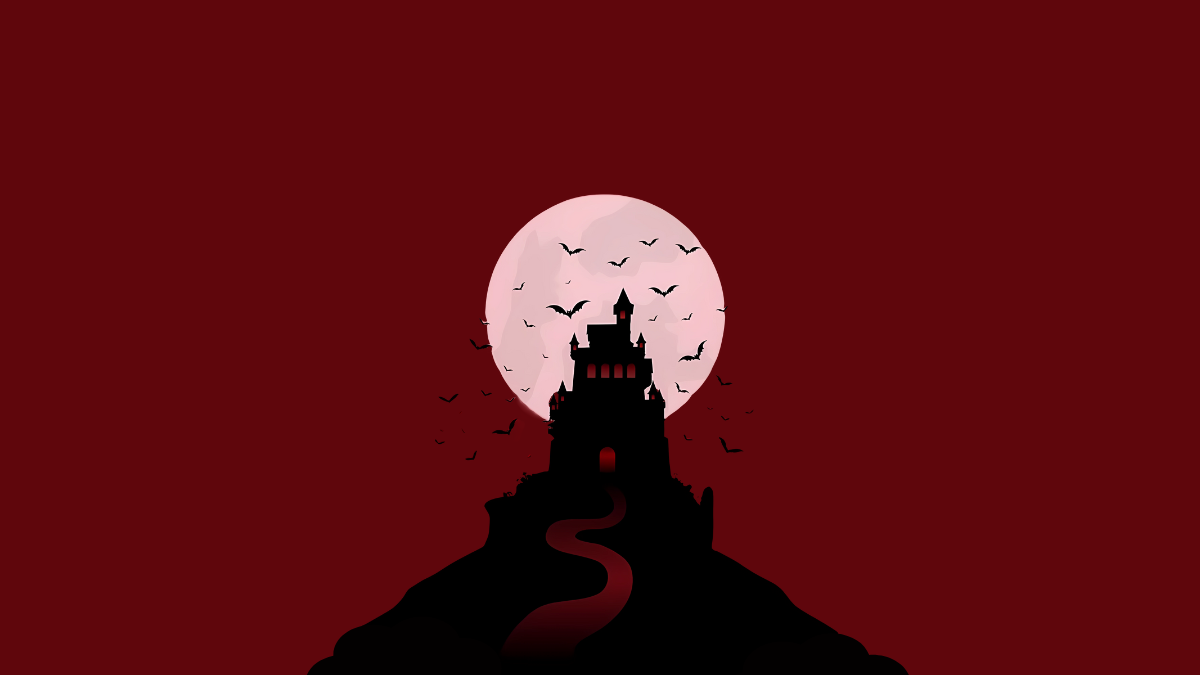
In 1897, Irish novelist Bram Stoker drew on centuries of folkloric vampire lore to create a Gothic horror novel that would far outlive him, with no sign of its dark star fading. Told through a series of letters, journal entries, and newspaper clippings, Dracula recounts the tale of a Transylvanian noble-turned-vampire who journeys to London, and the determined band of scholars and adventurers who set out to stop him.
Readers in our October 2025 book club discussion had a lot to say about the book, such as Shatha who struggled with the narrative, and yet managed to look past the surface to uncover a cautionary tale about the fear of the “other”:
Shatha’s Take:
”I’ve finally survived Dracula, and honestly, the vampire should take notes because this book sucked the life out of me first.”
Stoker’s Dracula barely gives us Dracula. The story basically boils down to a Victorian panic attack over anything that isn’t familiar or doesn’t follow its way of living. Dracula becomes the “other,” the foreigner that the empire fears will slip in and corrupt everything it holds sacred if it ever lets its guard down.
The diary format made me feel like I was stuck in a WhatsApp group chat I never agreed to join. Everyone keeps sending updates no one asked for and congratulating each other for basically existing. The women are written with such fragility that I’m convinced Stoker actually believed one stressful thought was enough to kill them. Lucy frets over suitors who behave like a supportive boyband. Mina is considered smart because she is apparently “blessed with a man’s brain.” And then there is Van Helsing, who speaks in a way that feels like he is constantly buffering. You wait and wait for a clear sentence, but it never quite loads.
The story loses its plot long before the ending. The last third of the book reads like corporate meeting notes: where everyone sat, who spoke first, and long monologues no one in real life could recall word for word. 50 pages in, I was already rooting for Dracula, hoping he would finally show up and snack on the whole group for eternity.
In an attempt to find the bright side, Samawiyah contrasted her disappointment with the story with the fact that she managed to find something to learn from reading the book:
Samawiyah’s Take:
”A contemporary editor would have slashed about 60% of this book. ”
I typically enjoy Victorian literature, and can bear its characteristic verbosity and pompousness, but Stoker took it a bit too far. Okay, but was the plot at least exciting, you may ask? No. Was it haunting and hair-raising? Also no.
Perhaps some of the blame for the last point rests on Time. Countless adaptations and modern reinterpretations, plus other works that are truly scary to the contemporary sensibility are bound to cloud your judgement. Still, for me, it was not all ‘spookiness-tolerance-meter-has-been-broken-by-The-Shining’. It was the first part of the novel with Jonathan in Dracula’s castle that set the tone (very well, I might add), and the rest of the novel proceeded to throw it out the window. Clearly, Stoker does know how to create suspense and write exciting scenes. Why then did he choose to not use this talent?
Our group discussion did shed some light on this. The observation of Victorian society’s obsession with the Rational, and of its anxieties surrounding invasion (both ideological and literal) from the ‘irrational, superstitious East’ made me see their approach to fighting Dracula in an entirely different light.
And I must be fair. There were some other good things too that did come out of reading this book. For instance, I improved my general knowledge. Has anyone ever looked up when blood types were discovered? No? You will if you read Dracula.
It is also certainly interesting to explore Victorian society’s hyper-obsession with repressing female sexuality. Stoker tries very explicitly to reframe the emerging ‘New Woman’ ideal into one that is acceptable to his sensibilities. “I am very progressive”, he is screaming. “A woman can be smart like a man? Sure, just as long as she’s very Christian about it.”
Overall, Dracula is neither a great nor a terrible book. There clearly are some interesting themes. And while it may be tedious to get through, you can get through it. I wouldn’t particularly recommend anyone read it, but I wouldn’t try and stop them if they really wanted to either. I’d just warn them— it’s not going to be what you expect.
Similarly, while Sri found something to admire in the book’s original storyline and inventive narrative framing, she was ultimately disappointed with the execution of what she thought had the potential to be a great book:
Sri’s Take:
”There seems to be an endless supply of paper, ink, and time in Bram Stoker’s world”
The novel Dracula by Bram Stoker had every element possible to be a great book. It had an original storyline that had not been explored yet by other authors, it had a fantastic way of presentation , i.e. journal entries by multiple people describing events as they unfold, and it had pretty nice characters. Unfortunately, none of the above elements were used properly, because the author simply did not know how to write. He deliberately makes it difficult for his readers to binge this book.
This book was remarkably boring. The author did not research any of the folklore surrounding the myth, he did not develop the characters enough, and he truly does not know how to write. The journal entries, even though they were written by multiple people, all read as though they were written by one person. Mina’s voice was not different from Van Helsing’s, and that was not different from Dr. Seward’s. All three were distinct in gender, age, and experience, yet they spoke in the same tone and language, that of a wise old man. This tonality issue removed the entire point of the multi-narrator format.
Further, the entries themselves read like someone trying to write a dramatic story, not like someone writing what happened that day. For instance, if a person speaks in the Cockney dialect, they may speak like that, but there is no reason for a character who does not speak Cockney to reproduce it word for word in their private journal. It also raises questions about their memory retention. No one forgets anything. There are no opposing views, no contradictions, no different perspectives. Everyone writes the exact same version of events.
The characters also spend a good 60 percent of the novel praising each other and never getting to the point. Readers have to exert considerable energy to understand what’s happening. We cannot even skim because something important might be hidden in the middle of a paragraph of excessive compliments.
There seems to be an endless supply of paper, ink, and time in Bram Stoker’s world for everyone to write long, emotional essays every single day.
The story itself could have been interesting had the author done even a little research. The tales of Vlad the Impaler, the historic context regarding Romanian–English relations, the folklore, all the things we heard from the Romanian members of our book club were so interesting and funny. If Stoker had included even some of that, this would have been a far better book. Instead, after finishing the novel, we still don’t know much about Dracula. If we relied only on the book to understand why Dracula became a vampire, why garlic or a wooden stake works on him, or how he shapeshifts into a wolf or bat, we would be completely confused. Even Dracula’s death wasn’t treated like a big enough deal. It just happened as if the villain of the entire novel didn’t deserve a dramatic moment.
The story also followed the natural order of its time: casual sexism, heavy racism, and a strong superiority complex. None of it is surprising for the era, but it doesn’t contribute anything meaningful to the plot.
The characters, Jonathan and Mina Harker, Dr. Seward, Van Helsing, Lucy Westenra, Arthur, and Quincy Morris were all typecast into very simple archetypes. Jonathan was the lawyer with grit, Mina was pious, wise, and virtuous, Lucy was young, innocent and lovely (I joke not, every single character has the exact same opinion of her and Mina), Arthur was rich and connected, Quincy was the muscle man, and Dr. Seward was Van Helsing’s smart lackey. Van Helsing himself was the wise, all-knowing man of the hour. Only he knows anything, and he makes the reader infuriatingly impatient before revealing even basic information. Most of the time he is either praising someone, speaking in riddles, or revealing important details in the most frustrating way possible. We are forced to take him seriously even when we absolutely do not want to.
Lucy Westenra’s story felt pointless. She existed mainly so the author could compare her to darling Mina and show how Mina was the superior, virtuous woman. Beyond that, Lucy contributed very little to the plot despite the huge amount of time spent on her.
Mina, on the other hand, is often praised as ahead of her time, and she does have ambitions while staying within society’s standards. She’s portrayed as the perfect woman who can do no wrong. But in my opinion (which most of the book club didn’t share), she was one-sided. She wasn’t really a feminist and did not actually do much. She typed, organised, and collated, basically serving as a secretary to the men around her. And even when she disagreed, darling Mina immediately acquiesced to her husband and the men around her because “they know better.” We barely see her think for herself until the very end.
To summarise, I am deeply disappointed. I would have thought of better ways to end my rant (It stopped being a review after the first paragraph). However, this book does not warrant a proper conclusion.